
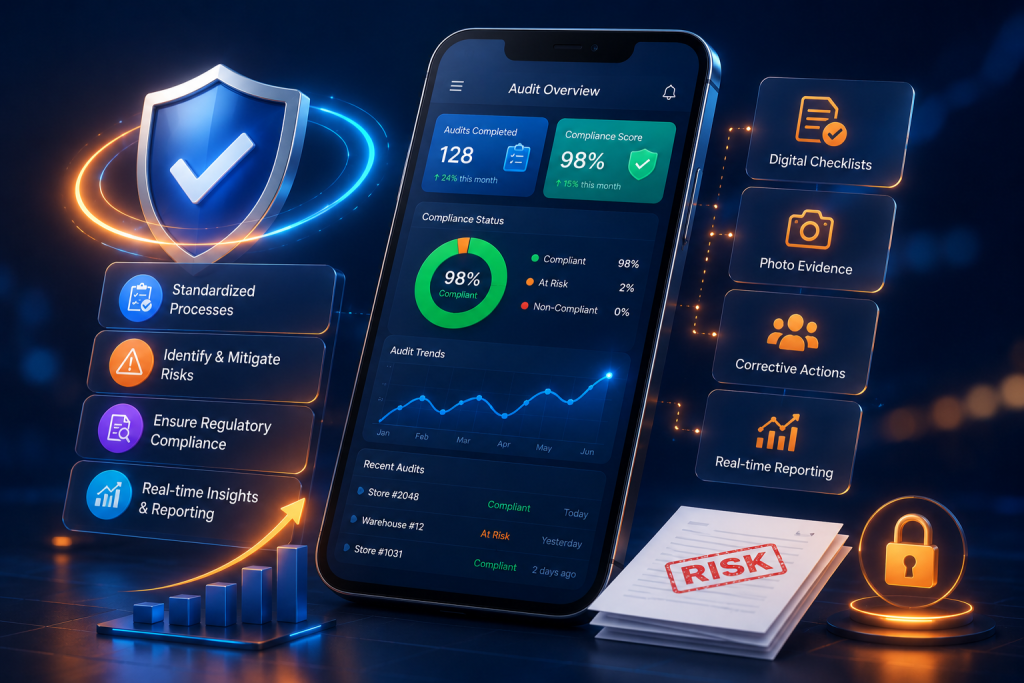
How to Reduce Compliance Risks with Digital Audits
Compliance is more than meeting regulations—it’s about protecting your business from costly mistakes, operational disruptions, and reputational damage. Whether you manage retail stores, restaurants, warehouses, healthcare facilities, or manufacturing plants, maintaining compliance across multiple locations can quickly become challenging.
Many businesses still rely on paper checklists and manual inspections, which often result in inconsistent processes, delayed reporting, and missed corrective actions. These small gaps can eventually lead to failed audits, customer complaints, or financial penalties.
This is where digital audits make a difference. By replacing manual inspections with digital audit software, businesses can standardize processes, improve visibility, and reduce compliance risks before they become serious problems.
In this guide, we’ll explore how digital audits strengthen compliance and why they’re becoming an essential tool for modern businesses.
Why Compliance Risks Are a Growing Challenge
As businesses expand, maintaining consistent standards becomes more difficult. Different teams may follow different procedures, inspections may be delayed, and important documentation can easily be misplaced.
Some of the most common compliance challenges include:
- Inconsistent inspection processes
- Missed safety and quality checks
- Delayed corrective actions
- Human errors during manual documentation
- Poor visibility across multiple locations
- Difficulty maintaining audit records
Without a structured audit process, these issues can impact operational efficiency and increase the risk of non-compliance.
How Digital Audits Help Reduce Compliance Risks
1. Standardize Every Inspection
Consistency is the foundation of compliance.
Digital audit software allows businesses to create standardized inspection checklists that every team follows. Whether inspections are conducted in one location or hundreds, everyone works with the same process, reducing inconsistencies and improving compliance.
2. Capture Accurate Data in Real Time
Paper-based inspections often require manual data entry, which increases the risk of errors and delays.
Digital inspections allow auditors to record observations, capture photos, and submit reports instantly from their mobile devices. Managers receive accurate, real-time information, enabling faster decisions and quicker responses to compliance issues.
3. Assign and Track Corrective Actions
Finding a compliance issue is only the beginning. Resolving it quickly is what protects your business.
With digital audits, corrective actions can be assigned immediately to the responsible team members. Managers can monitor progress, receive updates, and ensure every issue is resolved on time.
4. Gain Complete Visibility Across Multiple Locations
Managing compliance across multiple sites can be overwhelming without centralized reporting.
Digital audit platforms provide real-time dashboards where managers can monitor inspection results, compare location performance, identify recurring issues, and generate reports from a single platform.
This visibility helps businesses detect risks early and take proactive action.
5. Maintain Secure Audit Records
Audit records are essential during internal reviews and regulatory inspections.
Digital audit software stores inspection reports, photos, corrective actions, and compliance history securely in the cloud. This makes documentation easy to access whenever it’s needed while reducing paperwork and administrative effort.
Why Businesses Are Switching to Digital Audits
Organizations are moving away from paper-based inspections because digital audits improve both compliance and operational efficiency.
With digital audit software, businesses can:
- Standardize audit processes
- Improve compliance across every location
- Generate real-time audit reports
- Reduce paperwork and manual errors
- Track corrective actions efficiently
- Improve accountability across teams
- Store audit records securely
- Make faster, data-driven decisions
These benefits help businesses reduce compliance risks while improving overall performance.
How DoAudits Helps Reduce Compliance Risks
Managing compliance shouldn’t involve endless paperwork or manual follow-ups.
DoAudits is designed to simplify the entire audit process with powerful digital tools that improve visibility and accountability.
With DoAudits, you can:
- Create customizable digital audit checklists
- Conduct inspections using mobile devices
- Capture photo evidence during audits
- Assign and monitor corrective actions
- Generate real-time reports and analytics
- Monitor multiple locations from one centralized dashboard
- Maintain secure digital audit records
Whether you manage retail stores, restaurants, warehouses, healthcare facilities, or franchise networks, DoAudits helps you reduce compliance risks while improving operational efficiency.
Conclusion
Reducing compliance risks requires more than occasional inspections—it requires a consistent, transparent, and proactive audit process.
Digital audits eliminate manual paperwork, improve reporting accuracy, and provide real-time visibility into compliance performance across every location. By adopting a digital audit solution, businesses can identify issues faster, resolve them efficiently, and maintain higher operational standards.
For organizations looking to strengthen compliance while improving productivity, digital audits are no longer just an upgrade—they’re a smarter way to manage business operations.
Ready to Improve Compliance?
Replace paper-based inspections with DoAudits and transform the way you manage audits.
Create digital checklists, automate reporting, assign corrective actions, and monitor compliance across every location—all from one centralized platform.
Book your free demo today and experience smarter digital audits with DoAudits.
Frequently Asked Questions (FAQs)
1. What are digital audits?
Digital audits use software or mobile applications to conduct inspections, capture findings, and generate reports electronically, replacing traditional paper-based audits.
2. How do digital audits reduce compliance risks?
Digital audits standardize inspections, automate reporting, track corrective actions, and provide real-time visibility, helping businesses identify and resolve compliance issues quickly.
3. Which industries benefit from digital audit software?
Retail, hospitality, manufacturing, healthcare, logistics, facility management, restaurants, and franchise businesses all benefit from digital audit solutions.
4. Why is digital audit software better than paper audits?
Digital audit software reduces manual errors, generates instant reports, improves accountability, stores records securely, and simplifies compliance management across multiple locations.
5. How does DoAudits help businesses maintain compliance?
DoAudits enables businesses to create digital checklists, conduct mobile inspections, monitor corrective actions, generate real-time reports, and manage compliance from one centralized dashboard.